
What Artemis II Taught Us About Awe
By: CMAA
As humans, we’re part of something vast and meaningful, even if we can’t fully understand it yet.
Before NASA’s recent mission, I didn’t realise how little I’ve really seen of the moon.
For something so familiar, so constant in the background of daily life, it’s easily reduced to something flat, pale and almost forgettable. And yet, watching the images beamed back from Artemis II, I’m confronted by how easily we mistake the known for the fully understood.
The moon has always been there. It hasn’t changed. But our ability to see it has.
It makes me wonder how often we live with the quiet assumption that everything can eventually be explained. That with enough knowledge, progress or discipline, the world will become something we can neatly understand and contain. And yet here we are, watching people who’ve seen further than most of humanity ever will, and their most truthful response seems not to be certainty, but awe.
Science can feel like the domain of specialists: astronauts are people trained to observe, to measure, to name and to explain with their own language, and infinite levels of precision and detail. And yet, as the Artemis II crew spoke about what they saw in orbit, their comments reached far beyond data alone.
These were people highly trained to make sense of complex and unfamiliar environments. And yet, when asked to describe the experience, there was a hesitation, as though language itself had reached its limit. It wasn’t polished reflection or triumphant clarity, but something far more human.
Emotion. Silence. Wonder.
Science and Faith
The idea that science and faith belong in separate places is a false divide we’ve inherited. The idea that science deals with facts, and faith deals with meaning. That one explains the world, while the other responds to it. But the Artemis II mission reminded us all that the two aren’t so easily separated.
Science allows us to look closely, to investigate, to analyse. Science gives language to distance, shape, movement and matter so we can weigh and measure them. It helps us notice what we’ve missed. But for Christians, that deeper understanding can also draw us back to God.
Because if creation is this vast, this intricate, this unexpectedly beautiful even in places we previously assumed were empty, what does that say about the One who made it?
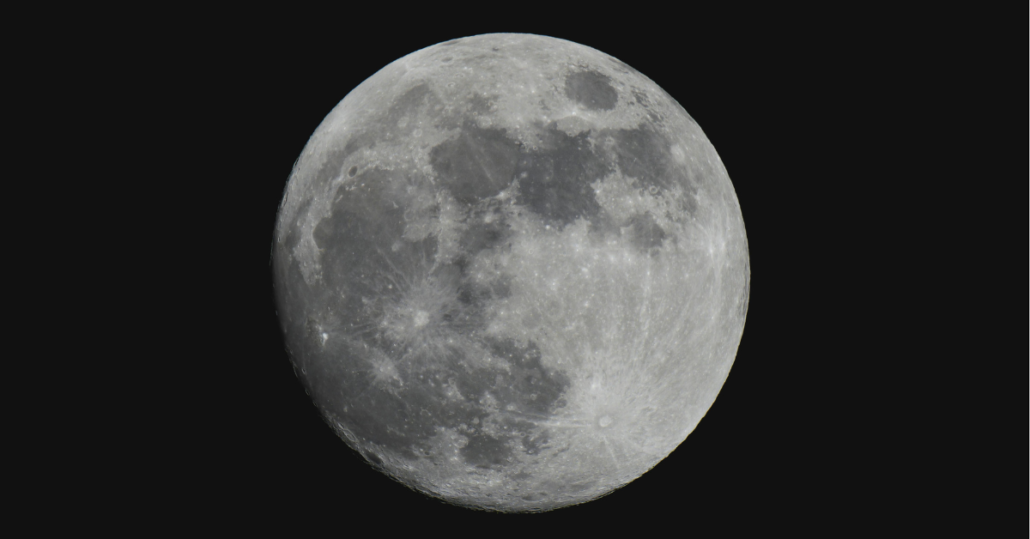
Thanks to photographic advancements, the new images of the moon aren’t so much about discovering something new so much as learning how to see what’s always been there. The moon didn’t abruptly become more beautiful, but suddenly, we got to see it differently. What once looked distant, grey and flat, we can see is rich in colour, texture, variety and a quiet complexity. It had always been that way, but we couldn’t see it yet.
So much of God’s creation is like that.
Not hidden from us, but waiting patiently for us to pay attention. Waiting for us to look a little closer, move a little slower, lean in and recognise the beauty that’s always existed, even when it was hidden from our eyes.
There’s something profoundly humbling about the idea that we can advance so far, build the technology, train the minds, develop the capacity to reach beyond our atmosphere, and still find ourselves in a position of discovery rather than completion.
We aren’t arriving at the end of creation.
We’re really only just beginning to notice it.
And that, in itself, is awe-inspiring.
Even now, in a world that can feel familiar and mapped and explained, there are glimpses of wonder breaking through. Small reminders of intelligence and creativity are woven into the fabric of existence. More evidence that we’re not the authors of this story, but participants within it.
That is why awe matters.
Awe interrupts us. It humbles us. It refuses to let creation become merely useful, efficient or ordinary. It reminds us that the world isn’t simply something to be studied, managed or consumed, but something to be received and appreciated as a gift.
The more we learn about this universe, the more we’re led back to the One who formed it. Through colour, texture, variety, through vastness and intricate detail, we begin to understand not only what God has made, but something of who He is: His generosity, His creativity, His attention to beauty, His extravagant love.
Every detail, every discovery, every moment of wonder feels, in some quiet way, like an invitation. Not only to keep discovering what’s out there, but to allow it to reshape what’s in here. To let it slow us down. To let it humble us. To let it remind us that we’re part of something vast and meaningful, even if we can’t fully understand it yet.
Imagine if every new image, every discovery, every glimpse into the depth of creation led us toward wonder, humility and a deeper awareness of God.
Perhaps our eyes are still learning how to see.
Not just what is out there, but what has been here all along. To notice it. To sit with it. To let it lead us, quietly and patiently, back to the One who spoke it into existence.
Article supplied with thanks to Christian Media & Arts Australia.
Feature image: Canva


