
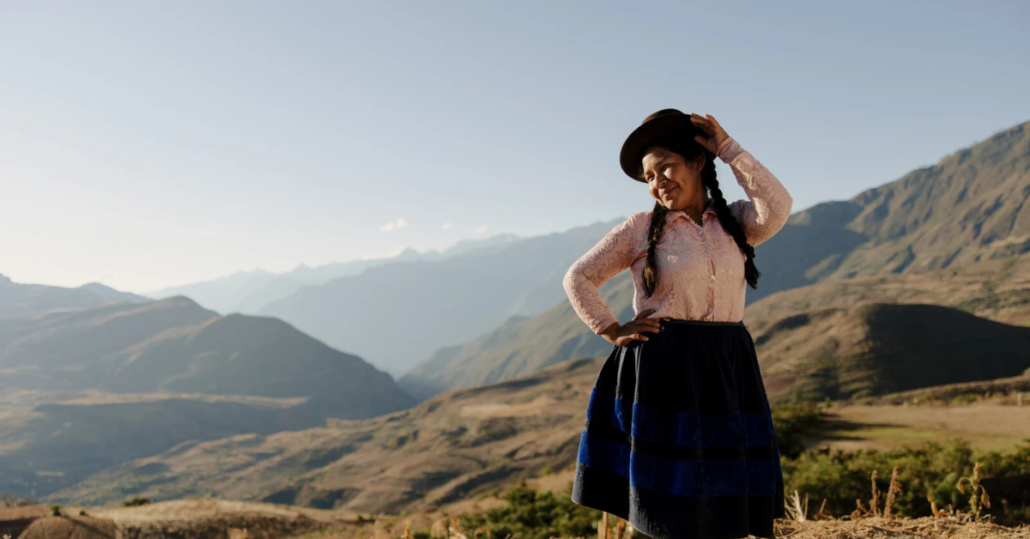
Elsa’s Story
By: International Justice Mission (IJM)
This is what freedom looks like: having the courage to start again
From surviving domestic violence to supporting other women in her community, Elsa’s story is one of courage, healing and the freedom to shape her own future. In the mountains of Peru’s Apurímac region, Elsa is raising her children, building a small food business and helping other women understand their rights.
This is Elsa’s journey in her own words.
Finding the Courage to Begin Again
I grew up speaking Quechua, the language of my parents and the language I still carry in my heart.
As a young woman, I dreamed of building a stable life and raising a family. But when I entered my first serious relationship, things slowly changed.
Jealousy and control became part of my everyday life. Over time, the violence grew worse. I was afraid, but I kept hoping things would improve. I wanted so badly to keep my family together.
For years, I rarely spoke about what was happening. Fear, shame and uncertainty made it difficult to ask for help.
Eventually, I found the courage to seek help. But the case did not move forward as I had hoped.
By then, I had endured nearly five years of abuse.
Leaving was one of the hardest decisions I have ever made. I worried about my son, what people would say and how we would survive on our own.
Eventually, I understood that if I wanted to protect my child, I first had to protect myself.
One day, I quietly left with my son and returned to my parents’ home in San Martín de Toxama, determined to begin again.
I expected to feel relief when I arrived home, but instead I fell into a deep depression. There were days when I did not want to leave the house, speak to anyone or think about the future.
Slowly, with the support of my family, I began taking steps forward.
Finding Support, and Rediscovering Myself
I still remember the day Flor de María, a psychologist from Paz y Esperanza, knocked on my door in 2023.
At the time, I distrusted everyone and had never participated in counselling. I rarely spoke about what I was going through.
She invited me to attend a community gathering. I decided to give it a chance.
For the first time, I found a space where I could speak openly without feeling judged, where people genuinely listened.
Counselling helped me realise that I had spent years putting everyone else’s needs before my own. I discovered something life-changing: I also deserved care, respect and dignity.
As I moved through the healing process, I began to rediscover myself.
I remembered the young woman who loved singing, soccer, fishing, cooking and spending time with others.
I started selling food in Andarapa, and people sought me out because they enjoyed what I prepared. Selling food restored my confidence and reminded me that I could move forward.
Healing was not immediate. Difficult memories remained, and some days were harder than others.
The difference was that I was no longer alone.
My family stood beside me, and the professionals at Paz y Esperanza supported me without judgement. Step by step, I learned to set boundaries, express my emotions and understand that the violence I had experienced was not my fault.
Helping Other Women Find Their Voice
In 2025, after participating in workshops and leadership activities supported by IJM and Paz y Esperanza, I was invited to join Peru’s Free to Serve Survivor Network.
I felt both excited and afraid. I wondered what I could offer when I was still healing myself.
At the same time, I was deeply grateful for everything I had received and wanted other women to find the same support and hope I had found.
Within the network, I met extraordinary women. Listening to their stories helped me realise I was not alone.
The survivor gatherings taught me an important lesson: when women listen to one another and share their experiences, they can change lives.
Because I speak both Quechua and Spanish, I often serve as a bridge for women who feel more comfortable expressing themselves in their native language.
As my involvement grew, so did my responsibilities.
I helped organise a community awareness campaign in Andarapa focused on preventing violence against women, girls and children, and helping families understand their rights.
On the day of the campaign, I served as the master of ceremonies and helped coordinate activities for children, families, community leaders and local authorities in the town square.
Public speaking made me nervous, but I felt a deep sense of responsibility.
As I stood before the crowd, I thought about my children, my nieces and nephews and every child who deserves to grow up free from violence.
What Freedom Looks like Today
Today, freedom feels real when I spend moments with my children, especially with my daughter.
Sharing meals and playing with her. Those are the happiest moments for me.
Knowing that my daughter is safe with me makes me feel very proud of myself.
One of my greatest motivations is also supporting women who are walking through experiences similar to mine.
When a woman comes to me and tells me she is experiencing violence, being able to help her is deeply meaningful.
When I listen to them, I remember exactly how I once felt: afraid, alone and unsure whether things would ever get better.
That is why I remind them that they are not alone and that there is always a path forward.
When I think about the future, I have one clear dream: I want to study psychology.
I know how powerful it is to find someone who listens, believes you and helps you see possibilities where you once saw only darkness.
I want to become that person for other women.
Painful memories still exist, and some losses will always remain part of my story. But I no longer allow those wounds to define who I am.
I am a mother, a daughter, a leader and a woman who learned to rise after falling many times.
When I experienced violence, I felt like a bird trapped in a cage, living with fear and uncertainty every day.
Today, I feel free.
Today, I see myself as a hummingbird: small, but strong.
The hummingbird is also the symbol of the Free to Serve Survivor Network in Peru, representing resilience, hope and the strength survivors find as they rebuild their lives.
A hummingbird may be tiny, but it keeps moving forward despite challenges, and that is exactly how I choose to live my life.
Help make freedom possible
Elsa’s story reminds us that freedom is not only about leaving violence behind. It’s also about having the support, opportunities and choices to build a future of your own.
Through partnerships with organisations like Paz y Esperanza, IJM works to support survivors, strengthen local responses to violence and help build communities where people can live in safety. Find out more at ijm.org.au
Article supplied with thanks to IJM
IJM is committed to protecting the dignity, privacy and safety of vulnerable people. Names, details and images may be changed or represented by actors to protect identities. All stories and images are used with informed consent and safeguarding practices.
Feature image: Supplied


